
Fix your swing.
Drop your handicap.
Record one swing on your phone. See how far your head and hips moved and how much forward bend you lost through impact, in inches and degrees. Then fix the one thing that costs you the most.
Google is reviewing the Android app. Join the list and get one email the day you can download it.
Your rounds, card, stats and handicap index are free.
On iPhone, join the list and get one email the day you can download Scratchmaxx.

Measure your swing to the degree.
Set your phone at hip height and record one swing. Face on, you see your head and your hips. Down the line, you see your spine angle. You read every number in inches and degrees, against the line tour players keep.
See your head move.
Read how far your head drifted from its address spot at the top and at impact. Tour pros in our test clips moved it 0.7 to 3.5 in going back.
See your hips shift.
Read how far your hips moved toward the target at impact. Tour pros in our test clips shifted 3.8 to 8.2 in. Under 1.5 in, you hang back.
See the bend you lose.
Read how many degrees of forward bend you kept through impact. Tour pros kept it within 5 degrees. An 18 handicap in our test clips lost 9 degrees.
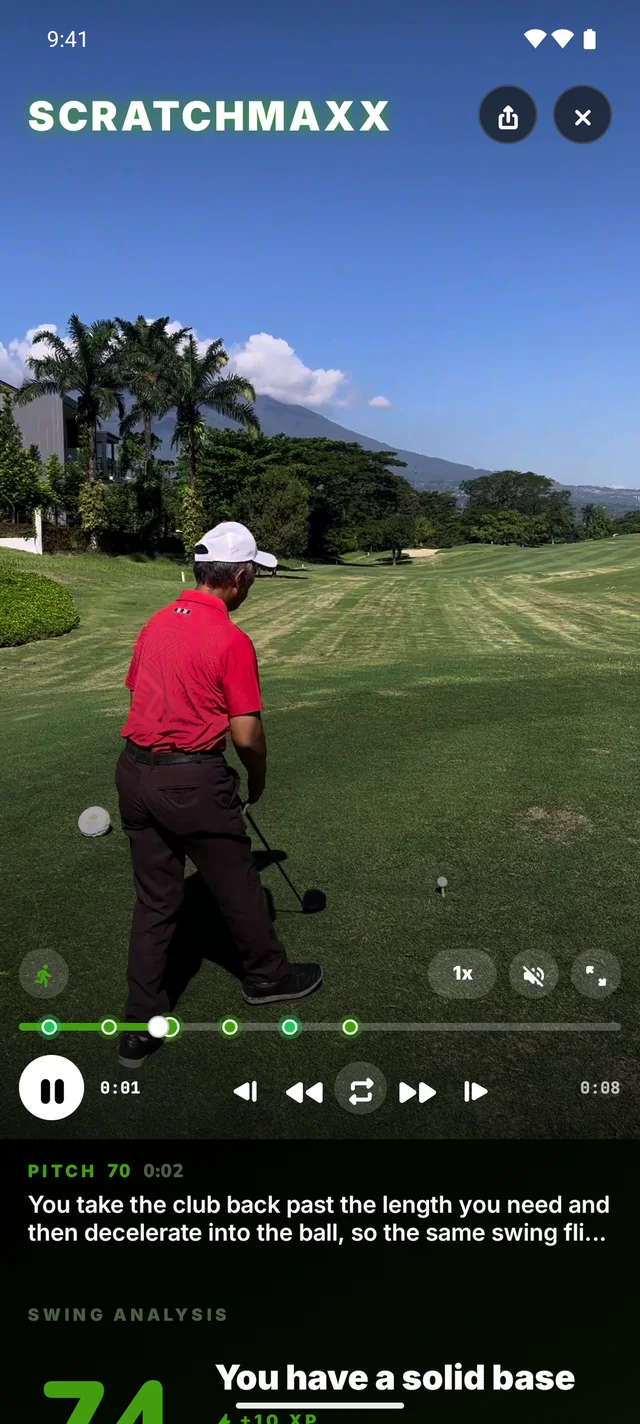
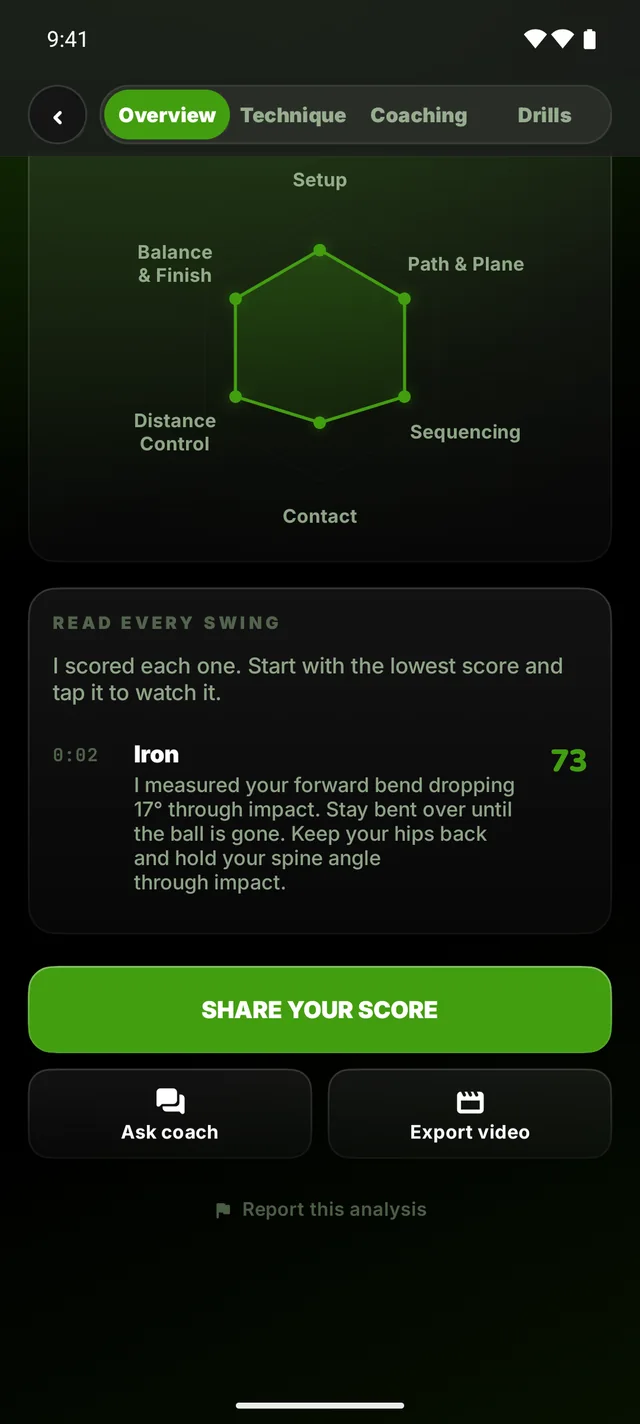
Check your swing against the tour line.
You read these seven checkpoints on every swing. Cross a line and that fault goes on your list with its number, so you know which one to fix first.
Fix one thing first.
You read every swing in your clip on its own, then you start with the fault that costs you the most and train it with its drill.
- Push a tee into the turf a hand past the ball.
- Hit the ball, then clip the tee.
- Finish with your weight on your lead foot.
Ask about your swing, your clubs or your next round, and get answers built on your own swings and rounds.
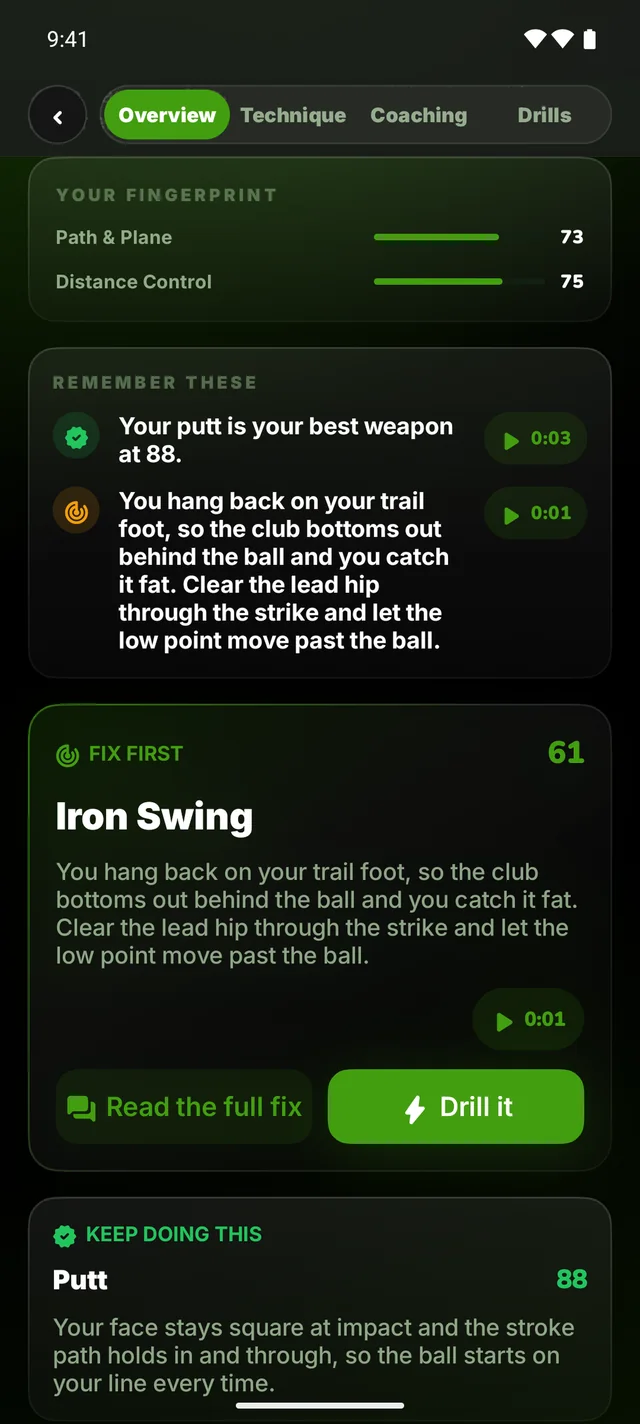
Play your round with your card.
Tee off with your scorecard: strokes, putts, fairways, greens and bunkers, hole by hole. Stand on each green once, and every round after that you see the distance to its centre from where you stand. Mark each shot and the club you hit.
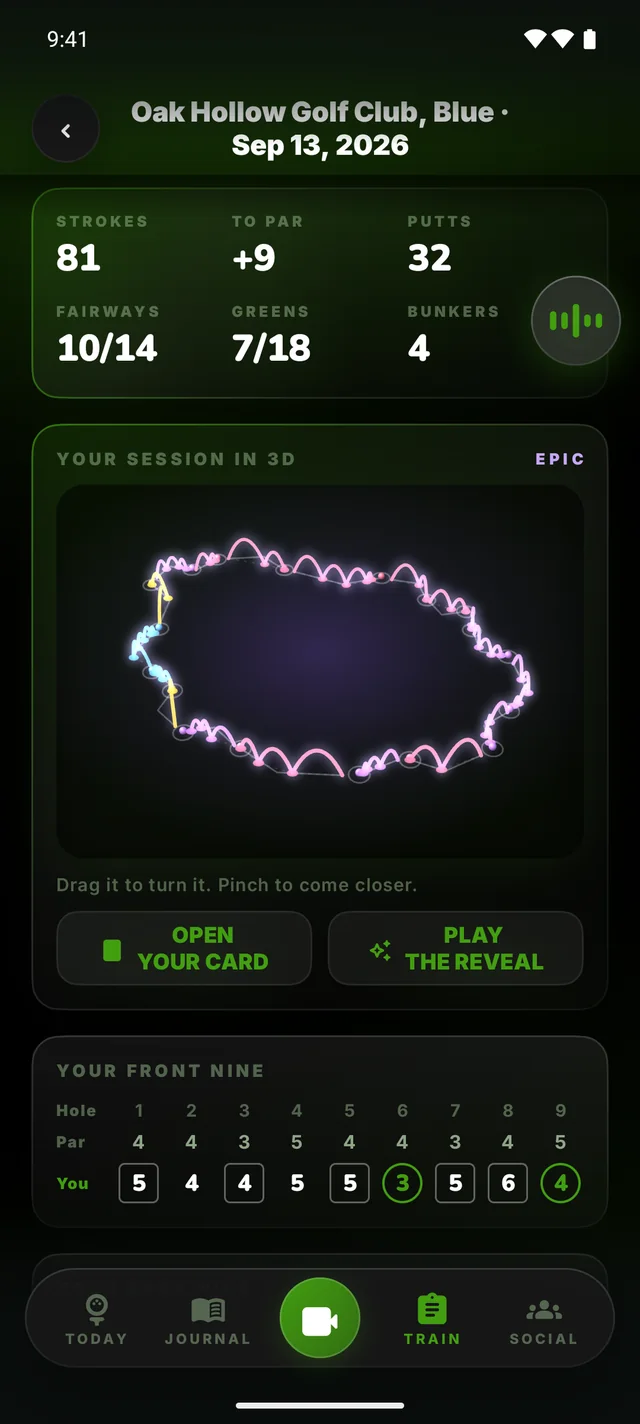

Know your carry with every club.
Mark your shots on the course and read the median carry of every club in your bag, with your longest beside it. Pick your club from the carry you hit most days.
Build your club distance chart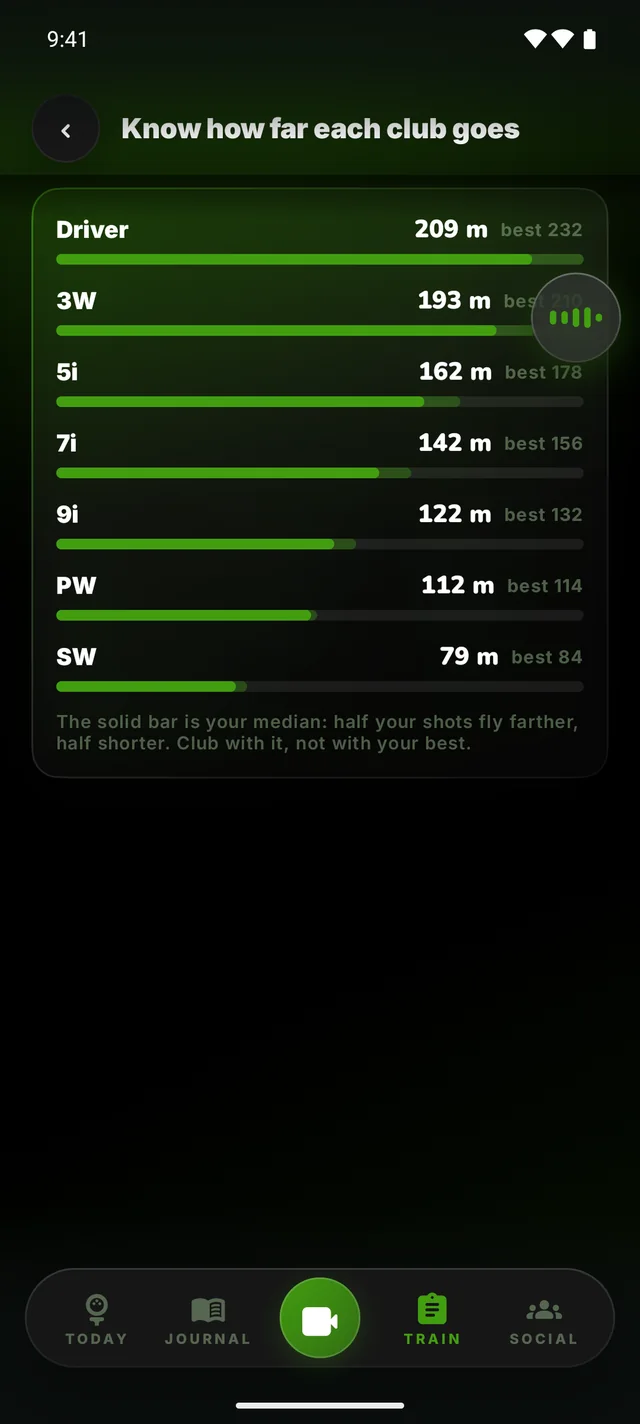
Track your index. Find your lost strokes.
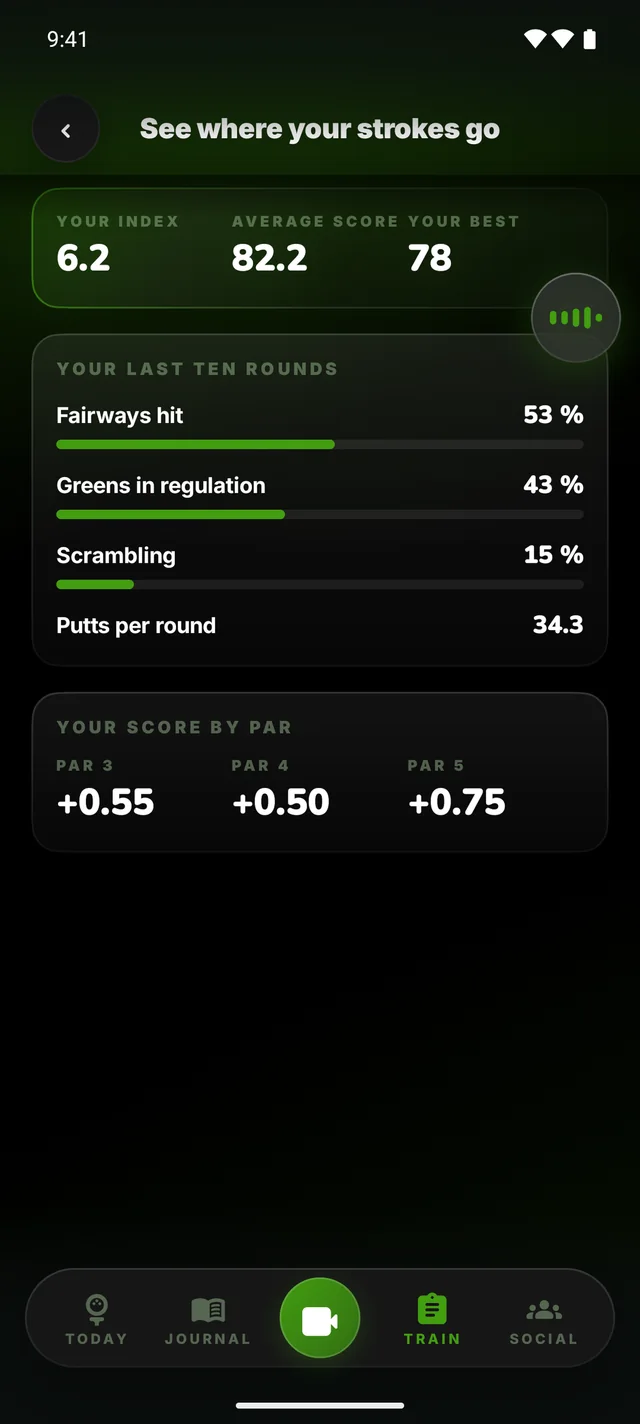
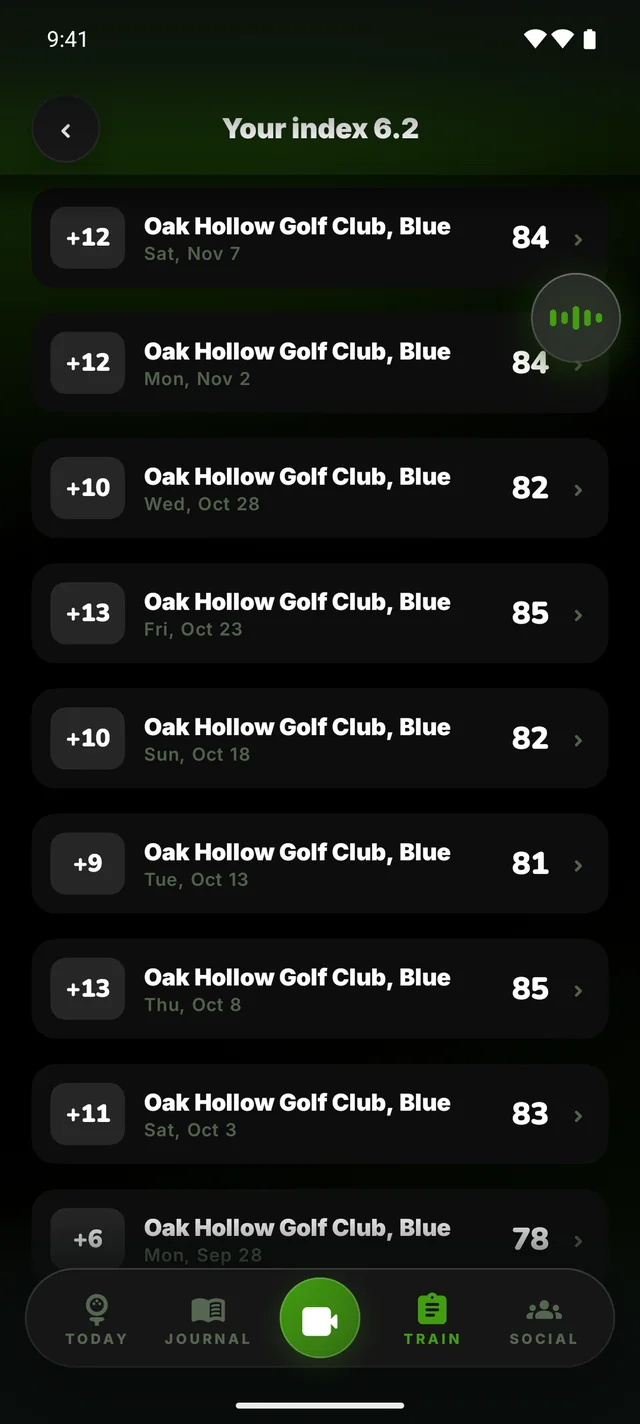
Add your course once with its pars, stroke indexes, rating and slope. Your index follows the World Handicap System: your best 8 of your last 20 rounds, every hole capped at net double bogey. Then see where your strokes go: fairways, greens, scrambling, putts and your score by par.
Read the fix before your next bucket.
Fix early extension in your golf swing: keep your posture
You early extend when your hips push toward the ball and you stand up before impact. See how much bend tour pros keep and three drills to fix it.
Stop hanging back in your golf swing: shift before you turn
You hang back when your hips stay on your trail side at impact. See how far tour pros shift, how to spot a reverse pivot and three drills to fix it.
Stop swaying in your golf swing: how far your head can move
You sway when your head and hips slide away from the target in your backswing. Learn how far your head can move, the 1 inch hip limit and three drills.
Calculate your golf handicap index with the WHS formula
Calculate your golf handicap index by hand: score differentials, net double bogey, the 3 to 20 round table, course handicap and one full worked example.
Film your golf swing: set up face on and down the line
Film your golf swing face on and down the line: where your phone goes, how high, how far back, which frame rate, and what each angle shows you.
Know your golf club distances: chart by club and speed
Use this golf club distance chart: tour carry and club speed for every club, amateur medians by handicap, and steps to measure your own carry.
Stop hitting fat golf shots: move your low point forward
You hit fat golf shots when your club bottoms out behind the ball. Find the body move that causes it on video and fix it with three drills.
Handicap index calculator
Enter your scores with each course rating and slope and get your index the World Handicap System way.
Course handicap calculator
Turn your index into the strokes you get on today's course, hole by hole, with your net double bogey.
Get your answers before you tee off.
What do you measure in a golf swing with Scratchmaxx?
Do you need a launch monitor or sensors?
Is Scratchmaxx free?
How do you track your handicap index?
How do you get distances to the green?
Can you use Scratchmaxx on iPhone?
Start with one swing.
Set your phone at hip height, record one swing and read your first fix.
Google is reviewing the Android app. Join the list and get one email the day you can download it.
Your rounds, card, stats and handicap index are free.
On iPhone, join the list and get one email the day you can download Scratchmaxx.